


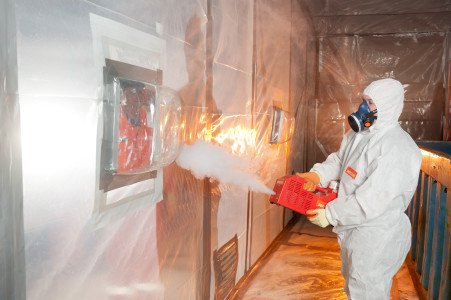
If you’re managing a block of flats or residential property in the UK, understanding your obligations around asbestos management compliance is essential. Not only is it a legal requirement, but it also protects the health and safety of residents, contractors, and staff.
This guide explains the key responsibilities under the Control of Asbestos Regulations 2012 and best practices for compliance.
Why Asbestos Management Matters
Asbestos was widely used in UK construction until 1999, especially in:
-
Insulation
-
Ceiling tiles
-
Pipe lagging
-
Artex ceilings
That means any building constructed before 2000 could contain asbestos.
-
When undisturbed and in good condition, asbestos usually does not pose immediate danger.
-
When damaged, drilled, or disturbed during maintenance, refurbishment, or tenant works, dangerous fibres can be released.
These fibres, if inhaled, can cause:
-
Mesothelioma
-
Asbestosis
-
Lung cancer
Block managers are legally required to manage these risks.
Who Is Responsible?
In residential blocks, the duty to manage asbestos falls to the dutyholder, usually:
-
The freeholder
-
The block manager or managing agent
-
A Residents’ Management Company (RMC)
-
A Right to Manage (RTM) company
Responsibility covers common parts of buildings such as stairwells, corridors, plant rooms, lofts, and roofs.
Note: Individual leaseholders are not normally responsible for asbestos in communal areas.
What Does Asbestos Compliance Involve?
To meet legal duties, block managers must:
1. Commission an Asbestos Survey
-
A Management Survey is needed to identify asbestos-containing materials (ACMs).
-
Must be carried out by a qualified, UKAS-accredited asbestos surveyor.
2. Maintain an Asbestos Register
-
Record all identified ACMs, including:
-
Location
-
Condition
-
Type of asbestos
-
-
Must be reviewed and updated regularly.
3. Create an Asbestos Management Plan
-
Sets out how asbestos risks will be controlled.
-
Should include:
-
Monitoring schedules
-
Emergency procedures
-
Communication with contractors and residents
-
4. Share Information
-
Contractors must be made aware of any asbestos risks before carrying out works.
-
Residents should be given relevant safety information affecting communal spaces.
5. Conduct Risk Assessments
-
Assess whether ACMs could be disturbed by planned works or normal maintenance.
6. Ensure Safe Removal (if required)
-
Removal or repair must be carried out by a licensed asbestos contractor, following HSE guidance.
Legal Consequences of Non-Compliance
Failure to comply with asbestos law can result in:
-
HSE enforcement notices
-
Prosecution and unlimited fines
-
Reputational damage
-
Serious health risks to occupants and workers
UK landlords and block managers have been prosecuted for asbestos failings—even where no one was harmed. Compliance is non-negotiable.
Best Practices for Block Managers
-
✅ Arrange regular asbestos re-inspections
-
✅ Keep the register and management plan updated
-
✅ Use only licensed asbestos professionals
-
✅ Provide awareness training for staff and contractors
-
✅ Keep thorough records of all actions taken
SEO Summary: Key Search Terms
This article is optimised for:
-
Asbestos management compliance UK
-
Block management asbestos responsibilities
-
Control of Asbestos Regulations 2012
-
Asbestos surveys for property managers
-
Managing asbestos in residential blocks
Conclusion
For UK block managers, asbestos compliance is a legal duty and a vital element of risk management.
If your building was constructed before 2000 and you have not yet carried out an asbestos survey, you could be unknowingly putting residents and contractors at risk.
By working with accredited professionals, keeping accurate records, and maintaining an up-to-date management plan, you can ensure compliance and provide a safer environment for everyone.